
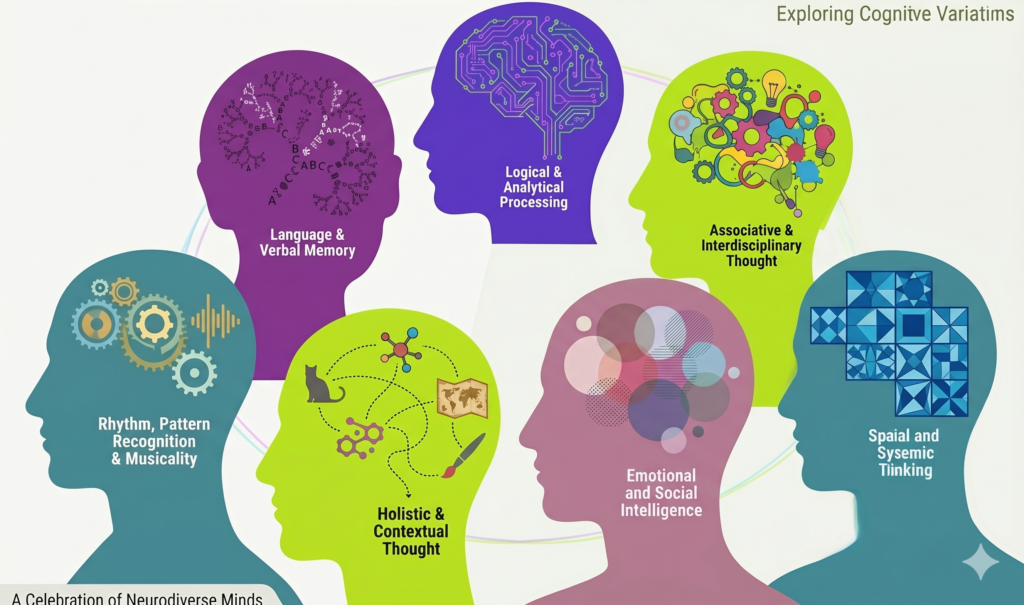
You might be naturally sensitive and perceptive. The kind of person who picks up on everything: the energy in a room, a subtle shift in tone, the weight of the news cycle, the pull of social media, or the unspoken tension in a conversation.
For a long time, you might have felt overstimulated, drained, sensory overloaded, or constantly “too much or too little” amid the frantic pace of modern life, and you are not alone.
What if what I am experiencing actually has a name, and that I am not the only one?
There is a name for how your system works: neurodivergent. It means your brain and nervous system process the world differently. It is not a daily problem to manage, but a natural human system that we are finally starting to value, respect, and truly understand.
Two Worlds: Neurodivergent & Neurotypical
We often use these two words to describe how our minds process life. It’s not about one being better than the other; it’s simply about how your internal software is built to interact with the world.
The Neurodivergent World
Built with a powerful radar. You are naturally intuitive and deeply sensitive to your surroundings.
-
The Sensitive Antenna: Instead of a thick shield, your nervous system has a finely tuned antenna. It picks up more signals from the world, both the beautiful and the overwhelming.
-
Hyperfocus & Deep Passion: When a project connects with your joy, you can enter a state of deep concentration, completely losing track of time while learning, creating, or solving problems.
-
Conscious Social Navigation: Because the modern world wasn’t built for your specific communication style, interacting often requires masking or adapting, which drains your energy and background apps much faster.
The Neurotypical World
Built for the mainstream. Their systems are wired to navigate modern environments with a different set of default settings.
-
A Built-In “Ad-Blocker” for Life: While a sensitive brain is trying to close 50 pop-up tabs of background noise, bright lights, or uncomfortable clothing, a neurotypical brain blocks those “ads” automatically.
-
Active Noise-Cancelling: Their brains filter out the background chaos by default. Because they aren’t running 100 heavy background apps just to exist in a crowded room, their battery stays much higher by lunchtime.
-
The Default “Button Layout”: Modern schools, workplaces, and social expectations feel intuitive to them because the mainstream world was designed by, and for, people who think exactly like them.
Different Way to See Neurodiversity
I don’t see neurodiversity as a daily problem to manage. It is a beautiful, natural human system that we are finally starting to value and truly understand.
Humans are not just brains. What often gets lost in modern conversations is that our minds are completely connected to our bodies. Your experiences emerge from your whole-body system, your nervous system, your environment, and your unique history.
How We Talk About Neurodiversity
The Medical Model (The Clinical View): This view looks through a clinical lens, focusing on diagnoses and symptoms (like Autism, ADHD, Dyslexia, Dyspraxia, or Tourette’s). While it can help access support and understand yourself, it can regularly leave you feeling like you are the issue that needs fixing.
The Social Model (The Environmental View): This shifts the focus from “what is wrong with you?” to “what do you need to function well?” Instead of forcing you to fit into a loud, neurotypical world, it examines the environment itself: the sensory load, the pace, expectations, and communication styles.
Neuro-affirming Support for Sensitive and Perceptive Minds
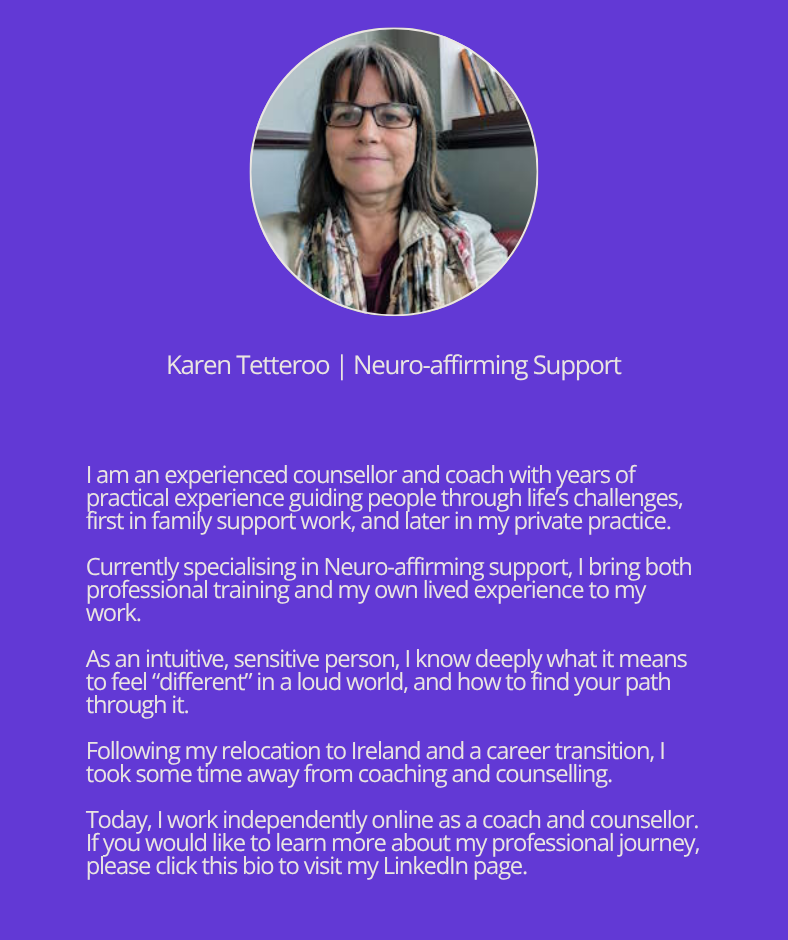
My vision as a Neuro-affirming coach and practitioner is simple: I hold the usefulness of clinical language, but I don’t reduce you to a diagnosis…
Together, we look at your whole system, your daily life, and what helps you feel confident, safe, happy, and steady in your body.
What we might explore together:
-
Reducing sensory and emotional overload without shrinking your life or hiding away.
-
Building boundaries that protect your energy without feeling harsh or cold.
-
Discovering your personal rhythm for work, rest, connection, and deep recovery.
-
Creating a calmer relationship with social media, news, and constant digital input.
If this speaks to you, let’s talk.
You don’t need to have the perfect words ready. Just tell me what life feels like right now, and what you are longing for instead.
I will always respond calmly and clearly. No pressure. No “fixing.” Just a quiet first step toward creating more space in your life.